EN
EN


Stop Energy Loss: Why Your Facility Needs SEPPES Insulated High Speed Doors
For any warehouse manager or cold chain logistics operator, the "open door" is a constant source of anxiety. Every second an industrial door remains open, expensive treated air escapes, and outside heat pours in. If you are struggling with rising energy costs or inconsistent internal temperatures, the solution isn't just a faster door—it's a smarter, Insulated High Speed Door.
In this article, we'll focus on one critical feature of the SEPPES Insulated High Speed Door: its Superior Thermal Barrier Technology, and how it solves the most common headache in the industry—energy leakage.
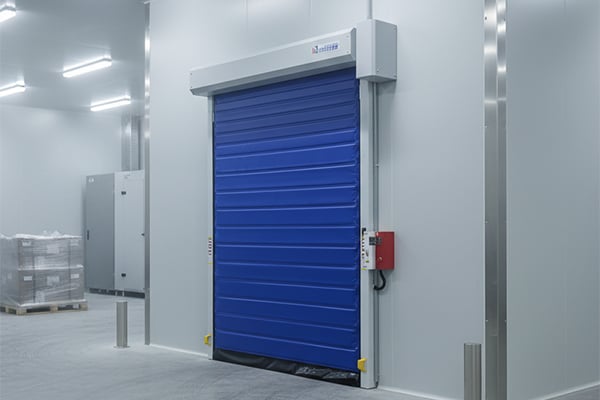
The Hidden Cost of Standard Industrial Doors
Many facilities use traditional sectional doors or standard single-layer high-speed doors. While functional, they often fall short in two areas:
Slow Operation: Traditional doors take too long to open/close, leading to massive air exchange.
Poor Insulation: Single-layer materials offer almost zero R-value, meaning heat transfers through the door even when it's closed.
This leads to "Compressor Overload"—where your HVAC or refrigeration systems work overtime to compensate for the loss, leading to premature equipment failure and astronomical electricity bills.
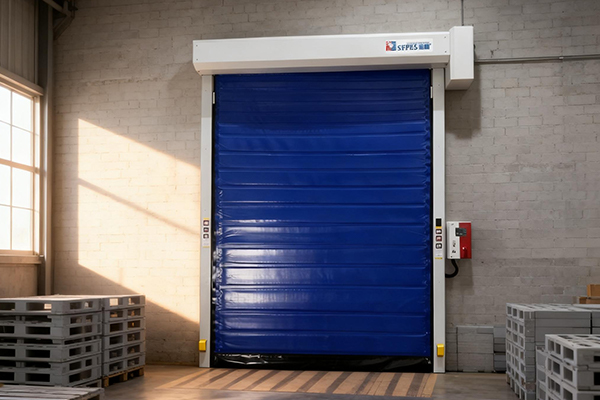
The SEPPES Solution: Thickened Insulation Meets Rapid Action
The SEPPES Insulated High Speed Door is specifically engineered to bridge the gap between "speed" and "thermal resistance." Here is how our specific design solves the energy loss problem:
1. Thickened Sandwich Door Panels
Unlike standard PVC doors, SEPPES utilizes a multi-layer "Sandwich" structure. The curtain consists of high-density thermal foam encased in heavy-duty fabrics or aluminum.
The Benefit: This creates a physical thermal break that significantly reduces the U-factor (heat transfer coefficient), keeping the cold in and the heat out.
2. Advanced Double-Track Sealing
Insulation is useless if air leaks through the gaps. SEPPES doors feature a patented double-row brush or EPDM rubber seal along the side tracks and a weighted soft bottom edge.
The Benefit: It creates a near-airtight seal when closed, preventing "chimney effects" where pressure differences pull cold air out of your building.
3. Smart Frequency Conversion (High Speed)
With opening speeds up to 0.8m/s - 1.2m/s, the exposure time of your internal environment to the outside world is minimized.
The Benefit: Faster cycles mean less air exchange per passage, maintaining a stable micro-climate for sensitive goods like pharmaceuticals or frozen foods.
Real-World Impact: Solving the "Condensation" Problem
A major pain point for cold storage is condensation and icing around the door frame, which creates safety hazards (slippery floors) and damages the door's mechanics.
By using SEPPES Insulated High Speed Doors with optional heating cables in the side tracks, facilities can eliminate ice buildup. The thick insulation prevents the outer surface of the door from reaching the dew point, keeping your loading docks dry, safe, and professional.
Why Choose SEPPES for Your Facility?
As a global leader in industrial door manufacturing, SEPPES products are certified by CE and SGS, ensuring they meet the highest international standards for safety and performance. We don't just sell doors; we provide energy-saving consultations to help you calculate your ROI through reduced utility costs.
Customizable Sizes: Tailored to your specific dock or internal opening.
Durability: Tested for hundreds of thousands of cycles.
Global Support: Reliable service to keep your operations running smoothly.
Conclusion: Invest in Efficiency
Choosing the right Insulated High Speed Door is an investment that pays for itself through lower energy bills and protected product integrity. If you are ready to stop "cooling the neighborhood" and start protecting your bottom line, SEPPES is here to help.
Ready to optimize your facility? [Contact SEPPES today for a customized quote] or download our technical brochure to see the full specs of our insulated series.