EN
EN


Ensuring GMP Compliance: Why Airtightness is the Ultimate Feature for Pharmaceutical Clean Room Doors
In the pharmaceutical industry, a door is not just an entrance; it is a critical component of the environmental control system. For facilities adhering to GMP (Good Manufacturing Practice), the biggest challenge is maintaining the strict pressure differential between different cleanliness zones.
When searching for pharmaceutical clean room doors, many facility managers focus on material, but they often overlook the real "silent killer" of efficiency: Air Leakage during high-frequency cycles.
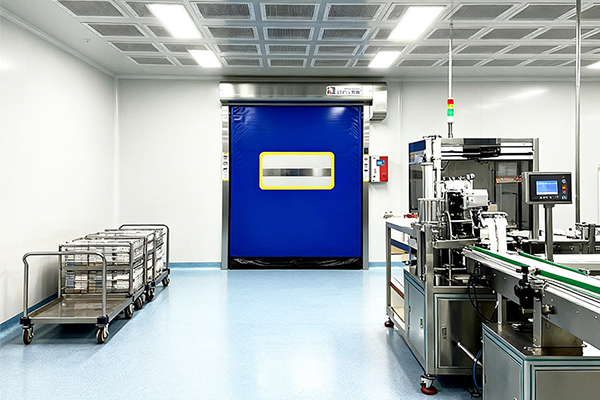
The Real Problem: The "Pressure Drop" Crisis
In a Grade B or C cleanroom, even a 5-second delay in door closing or a 2mm gap in the side tracks can lead to:
Loss of Pressure Differential: Forcing HVAC systems to work overtime, skyrocketing energy costs.
Cross-Contamination: Airborne particles entering sterile environments during slow door transitions.
Audit Failures: Inconsistent environmental data leading to costly production halts.
The Solution: SEPPES High-Speed Doors with Zipper Self-Repairing Technology
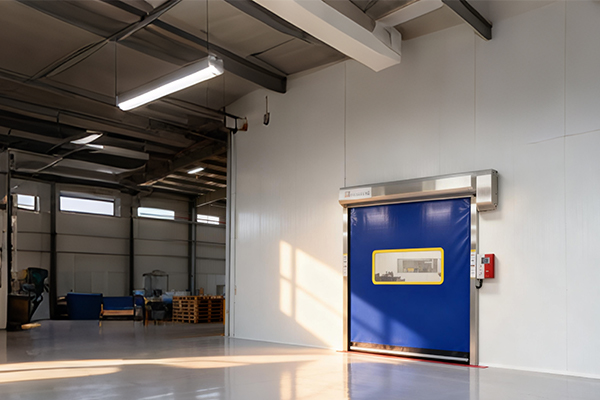
To solve the conflict between "frequent access" and "strict sealing," SEPPES has engineered a specialized high-speed door specifically for the pharmaceutical sector. The standout functional point is our Zipper-Track Airtight Technology.
1. Superior Airtightness for Pressure Control
Unlike traditional PVC doors that use brushes or rigid weights, the SEPPES clean room door features a zipper-style edge that locks the curtain into the side tracks.
The Benefit: It creates a nearly hermetic seal, effectively preventing air exchange even when there is a significant pressure difference between rooms.
2. "Self-Repairing" Design for Zero Downside
In a busy pharmaceutical warehouse or production line, accidental collisions with trolleys are common. Traditional doors would bend or break, compromising the cleanroom integrity for days.
The Feature: If impacted, the SEPPES curtain unzips and automatically re-inserts itself into the track on the next upward cycle.
The Result: No maintenance calls, no air leaks, and uninterrupted production.
Application Scenario: Material Transfer & Airlocks
Imagine a material airlock (Pass Box area) between a non-classified packaging zone and a sterile processing zone.
Using a standard door results in a "gust" of unconditioned air entering every time a pallet moves. By integrating the SEPPES Fast Door with an interlocking system:
Door A cannot open until Door B is fully sealed.
The 0.8m/s - 1.5m/s opening speed minimizes the "open-gate" time, ensuring that the air handling unit (AHU) can maintain the required 15-20 Pascal pressure difference with ease.
Technical Specifications for Pharmaceutical Standards
|
Feature |
SEPPES Pharmaceutical Series |
Advantage |
|
Material |
High-density PVC (FDA Compliant) |
Easy to sanitize & chemical resistant |
|
Closing Speed |
Up to 1.2 m/s |
Reduces air exchange time |
|
Sealing Performance |
Class 11 (GB/T 7106) |
Minimal leakage at high pressure |
|
Control System |
Specialized Servo System |
Smooth, millisecond-accurate response |
Why Global Pharmaceutical Brands Trust SEPPES?
As a professional manufacturer, SEPPES understands that "Pharmaceutical clean room doors" must meet more than just aesthetic standards. Our products are designed to pass rigorous CE and SGS certifications, ensuring that your facility remains compliant with international health authorities.
We don't just sell doors; we provide environmental stability. From preventing dust accumulation with our smooth, sloped header designs to ensuring touchless entry with infrared sensors, every detail is crafted for hygiene.
Ready to Optimize Your Cleanroom Environment?
Don't let a sub-par door be the weak link in your GMP facility. Contact SEPPES today for a customized entrance solution that protects your product and your bottom line.