EN
EN


SEPPES Doors: The Global Growth Journey of a Hidden Champion
If one word could summarize foreign trade professionals in 2025, it would likely be change.
Tariff policies shifted repeatedly, exchange-rate volatility intensified, and raw material and logistics costs rose and fell unpredictably. At the same time, global demand structures were adjusting, making foreign trade no longer a field that could move forward on experience and habit alone. Meanwhile, new tools such as AI have rapidly entered front-line foreign trade work, reshaping how teams acquire customers, communicate, operate, and make decisions.
Change has become a constant test pressing inward, forcing foreign trade professionals to relearn, readapt, and even rethink where growth and efficiency truly come from.
On December 22, the Alibaba.com Digital Foreign Trade True Niu Awards arrived in Hangzhou as scheduled. At the event, foreign trade professionals debated the paths, methods, and tools for going global.
Yang Yuanjia, Chairman and General Manager of SEPPES Doors from Suzhou, was one of the participants. In five years, he proved that even a founder with no language advantage, no platform experience, and no foreign trade process knowledge could bring intelligent manufacturing from China to the world.

SEPPES Doors Chairman and General Manager Yang Yuanjia advancing to the 2025 True Niu Awards Annual Top 10
1. Opportunities Move Alongside Change
Suzhou is one of the most representative manufacturing bases in China. In 2024, the city's high-tech industry output reached RMB 2.57 trillion, and its total import and export volume reached RMB 2.62 trillion. Dense and complete industrial support, a mature and stable supply chain, and strong openness to new technologies and business models have made Suzhou an important starting point for many manufacturing companies to grow and evolve. Yang Yuanjia's entrepreneurial story began here.
Yang first served in the military in Beijing and later worked as a journalist. During two to three years of reporting, he interviewed many entrepreneurs and gradually formed a clear view: to build a long-term business, one must be rooted in real demand.
Industrial doors became the entry point he chose.
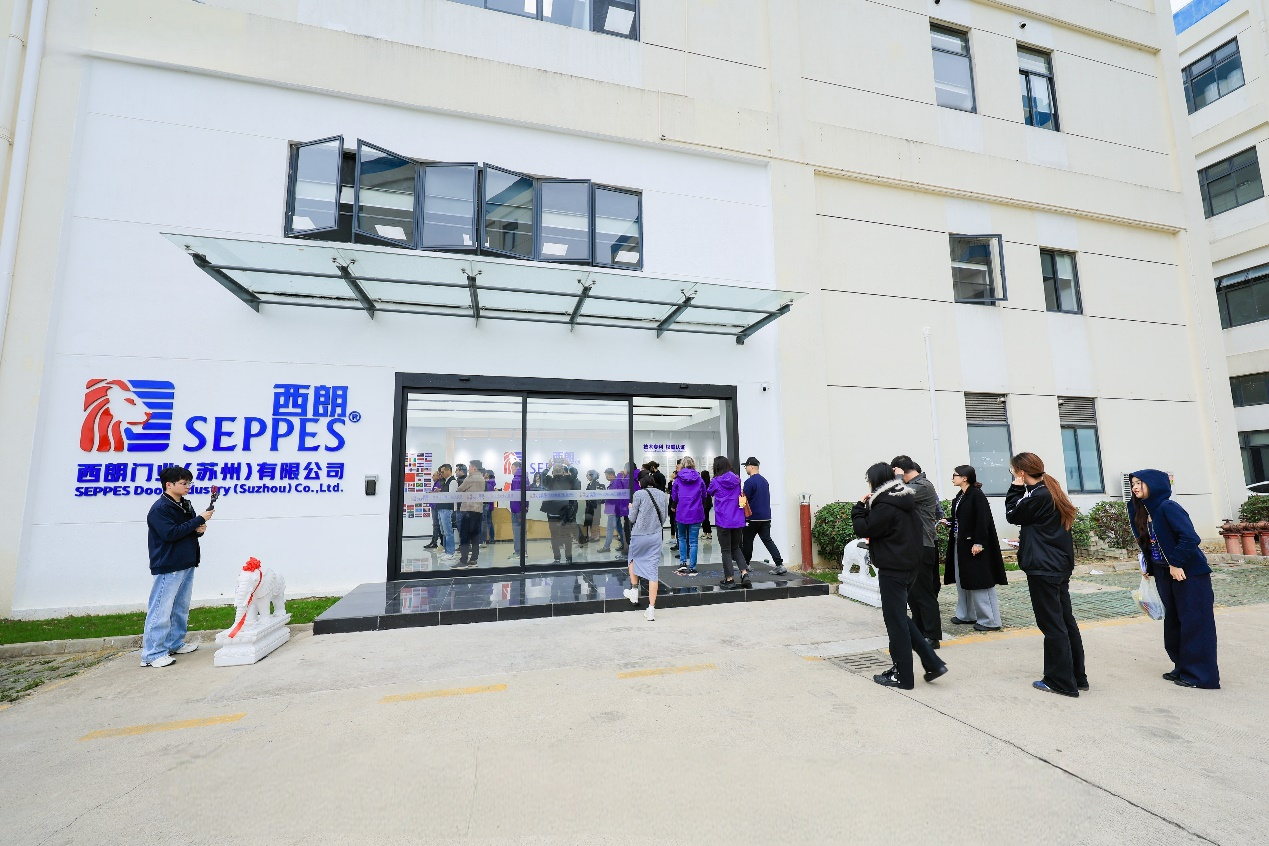
Dozens of overseas guests visiting the SEPPES Doors factory in Suzhou
In Yang's view, industrial doors are essential infrastructure for manufacturing. Whether a factory is newly built or being renovated, safety, efficiency, and stability always come first. As intelligent manufacturing accelerates, factory layouts are changing. More production lines are becoming automated and unmanned, and industrial doors are no longer just doors on a building facade. They now appear between production lines, in robot work cells, welding rooms, and unmanned material-handling passages, where they provide rapid isolation and safety protection as part of the production system.
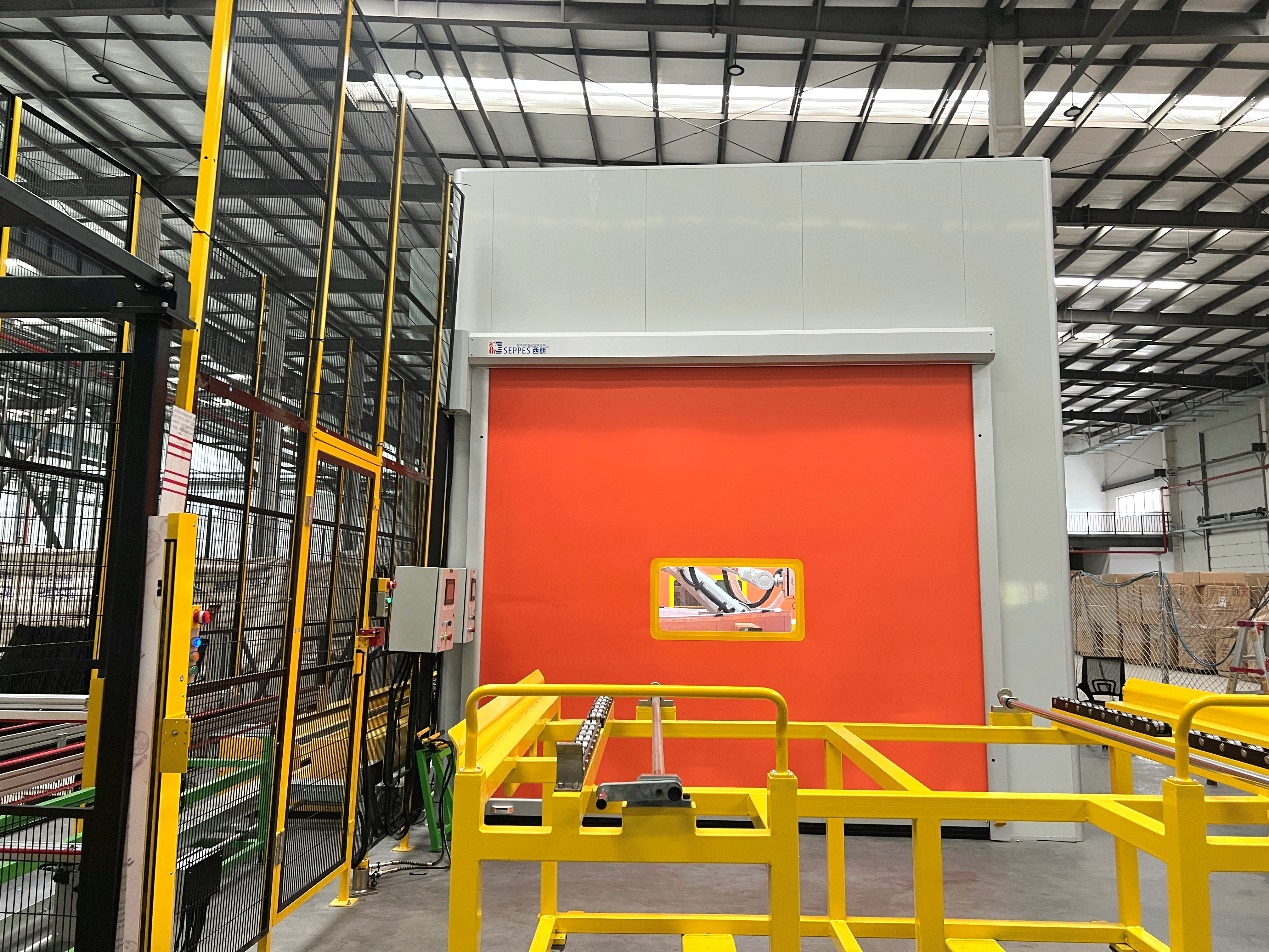
Protective intelligent high-speed door developed by SEPPES Doors for robot work cells
Based on this judgment, Yang placed his entrepreneurial focus on industrial doors as a necessary product. In his view, if a three- or four-meter-high industrial door takes one or two minutes to open and close each time, it becomes a hidden bottleneck in the production rhythm. With intelligent upgrading, opening and closing in two or three seconds can truly serve high-efficiency modern factories.
This seemingly small difference is exactly what creates long-term growth potential for intelligent industrial doors. For this reason, SEPPES Doors set its target on high-quality industrial doors from the beginning, insisted on building its own brand, and faced international competition directly.
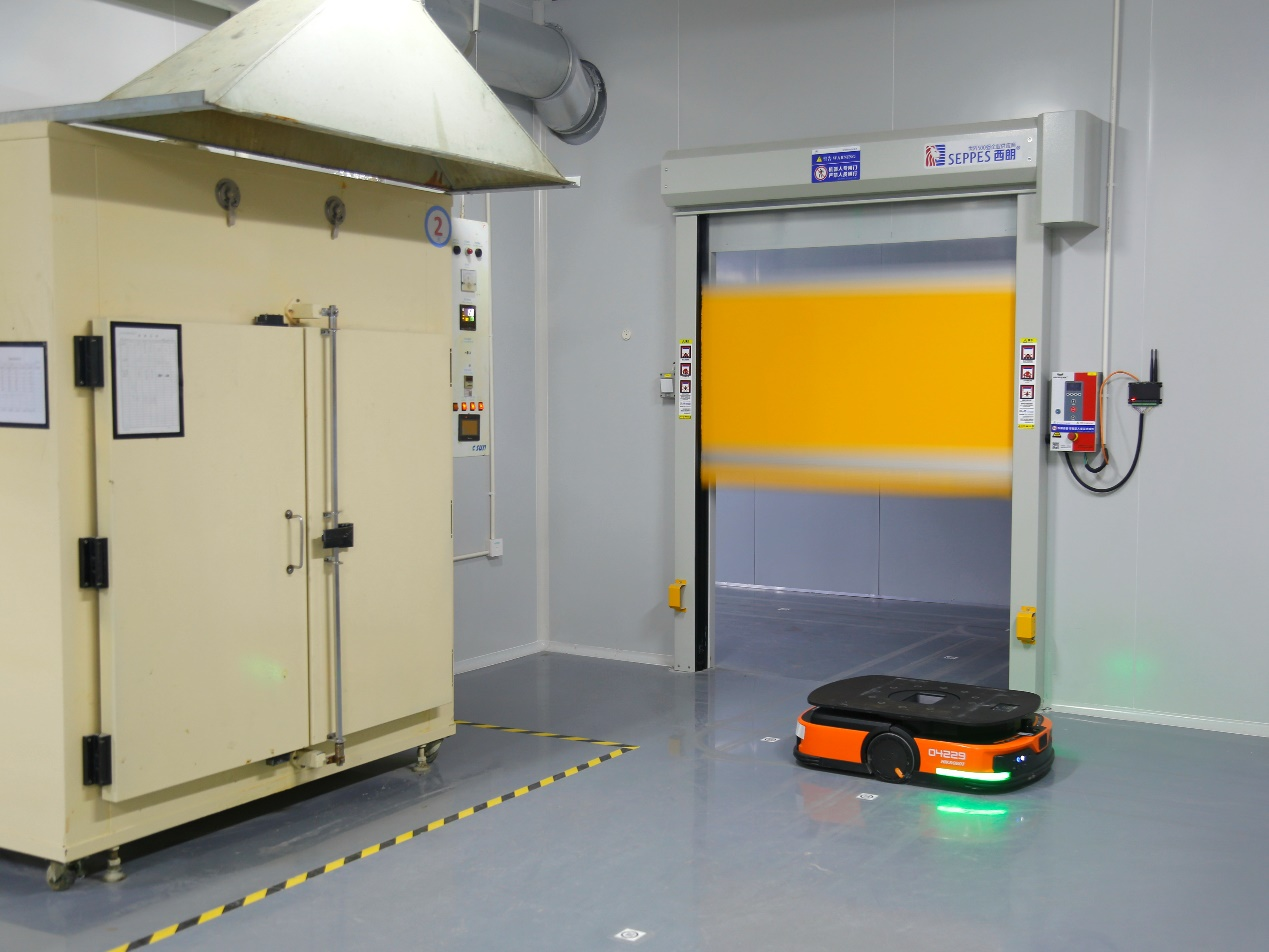
Intelligent high-speed door developed by SEPPES Doors for linkage with AGV unmanned handling vehicles
Suzhou's manufacturing environment gave this choice practical support. Around the specialized field of industrial doors, SEPPES gradually built a complete chain from design and R&D to production and delivery, while continuously integrating radar, photoelectric, geomagnetic, and other automatic sensing technologies into its products. This allows industrial doors to operate in coordination with production-line equipment and robot systems.
With the help of Suzhou's mature local component supply system and technical talent pool, the company continued increasing R&D investment and improving customization capabilities. It quickly established a strong position in the industrial door sector, grew into a hidden champion in the industry, and now holds more than 50 patents.
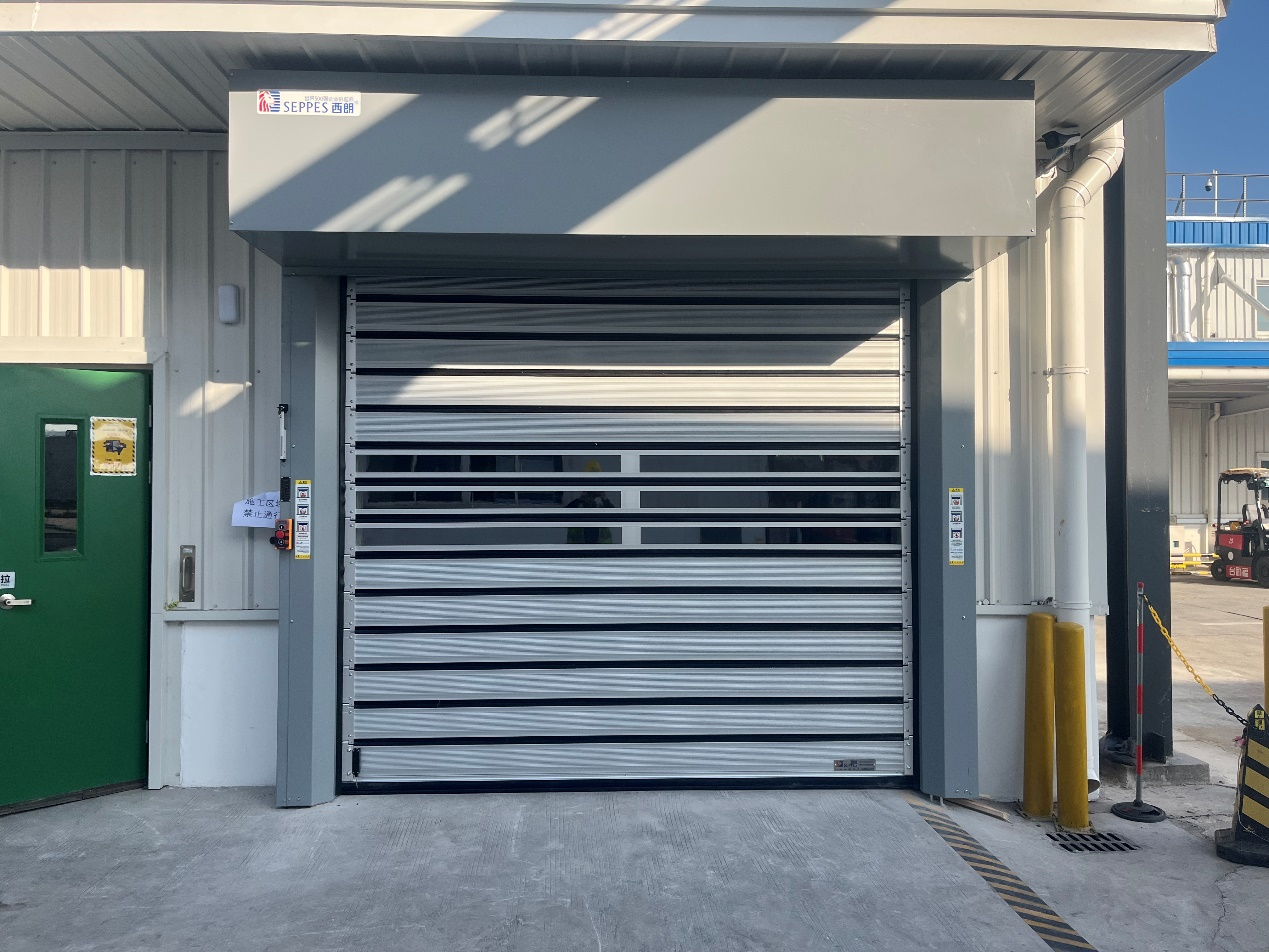
High-speed turbo rigid door product developed by SEPPES Doors
Even as its domestic business matured, Yang avoided going global for quite some time. In his own words, he was a three-no founder who did not understand languages, platforms, or foreign trade processes. Foreign trade naturally felt intimidating.
The turning point came during a year-end review in late 2019. The SEPPES Doors team noticed that more domestic intermediary customers were buying from them and then shipping the products directly overseas. This change gave Yang a clear insight: there was demand for the product overseas.
At the same time, competition in China's manufacturing sector was intensifying, and Yang needed to find a second growth curve for SEPPES Doors. Given his own three-no starting point, he made a decision: focus on online platforms such as Alibaba.com and learn foreign trade from scratch.
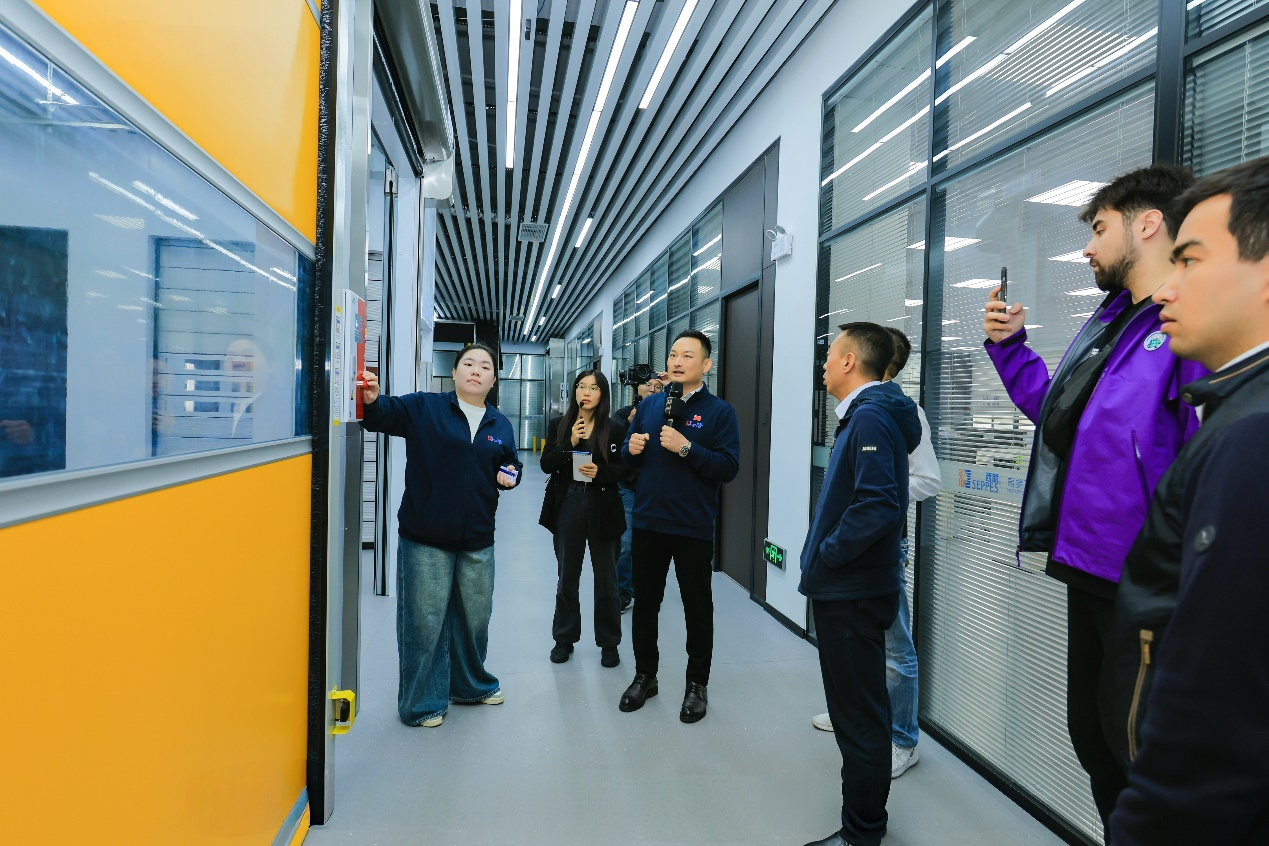
SEPPES Doors Chairman and General Manager Yang Yuanjia receiving overseas guests in the product showroom
2. The Evolution of a Three-No Founder
Soon after the overseas business began, the company encountered the global pandemic. Overseas trade shows stopped, offline visits were interrupted, and traditional foreign trade channels failed almost simultaneously. With guidance from Alibaba.com, Yang realized that the pandemic would change overseas purchasing habits and that the shift from offline to online was the best opportunity.
During this process, Yang discovered that SEPPES Doors' products naturally had cross-market adaptability, and orders quickly spread across multiple markets. This was closely related to the nature of intelligent industrial doors. Industrial doors do not depend on specific consumer habits or cultural preferences. They serve production scenarios. In any country, wherever there are workshops, production lines, and automated equipment, there is demand for industrial doors.
This advantage was further amplified on Alibaba.com.
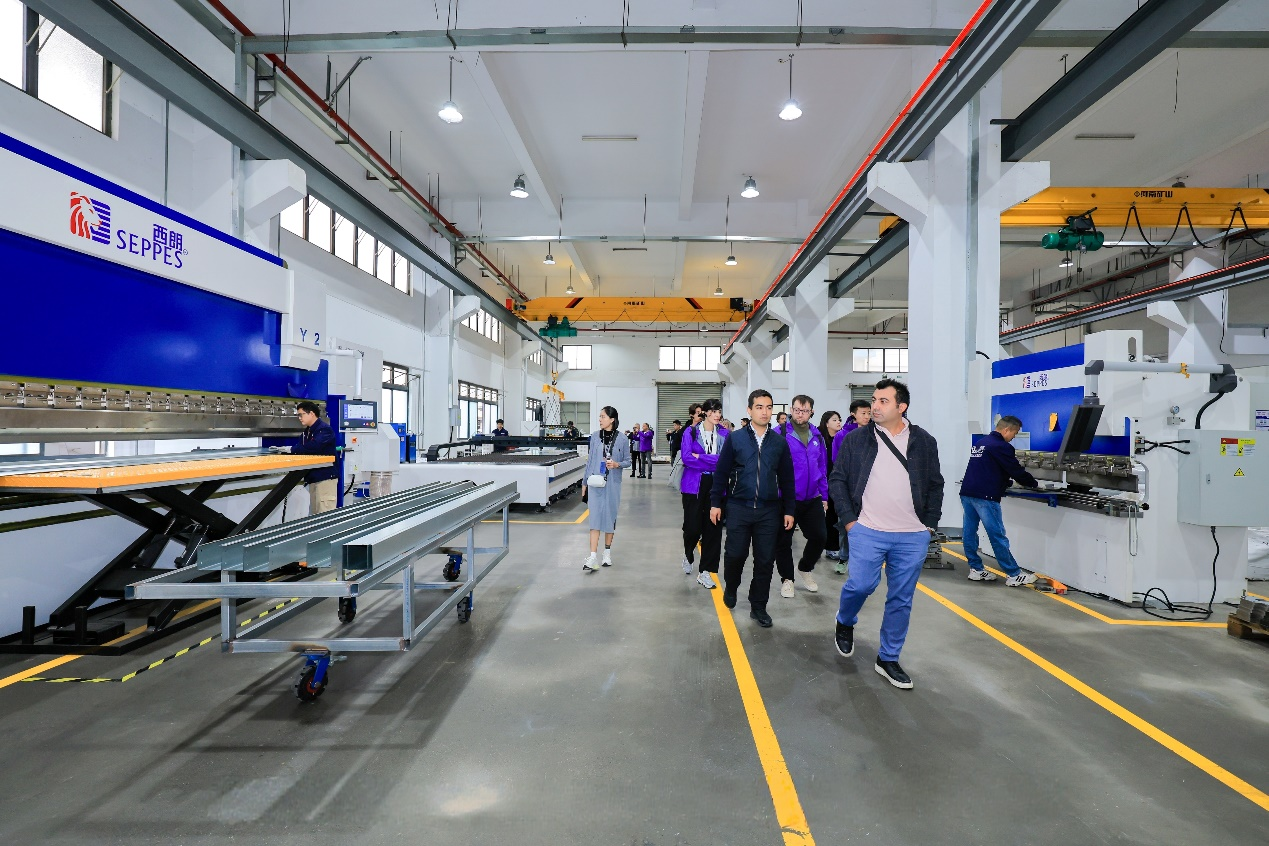
Overseas guests visiting the SEPPES Doors factory and production lines
At the start of the partnership, the platform's guided support helped the SEPPES team get up to speed quickly. Platform account managers stayed involved in daily operations, from account structure and platform rules to data analysis and staged reviews. Alibaba.com's support accompanied SEPPES throughout its growth, helping the company gradually build platform operation capabilities.
As operations became more structured, the SEPPES foreign trade team also evolved across inquiry follow-up, customer screening, and deal-closing rhythm. Then came the company's first major order on Alibaba.com.
The large order began with an ordinary inquiry. The customer initially needed only three to five sets of industrial doors, and the team followed the usual process of quotation, parameter confirmation, and delivery schedule communication. During one exchange, however, they discovered that the buyer was a leading seafood processing company in Southeast Asia with more than 20 processing plants around the world.
The two sides then held repeated discussions around application scenarios, usage frequency, safety standards, and SEPPES Doors' own R&D and production capabilities. During this process, the platform's certification system played a practical role.
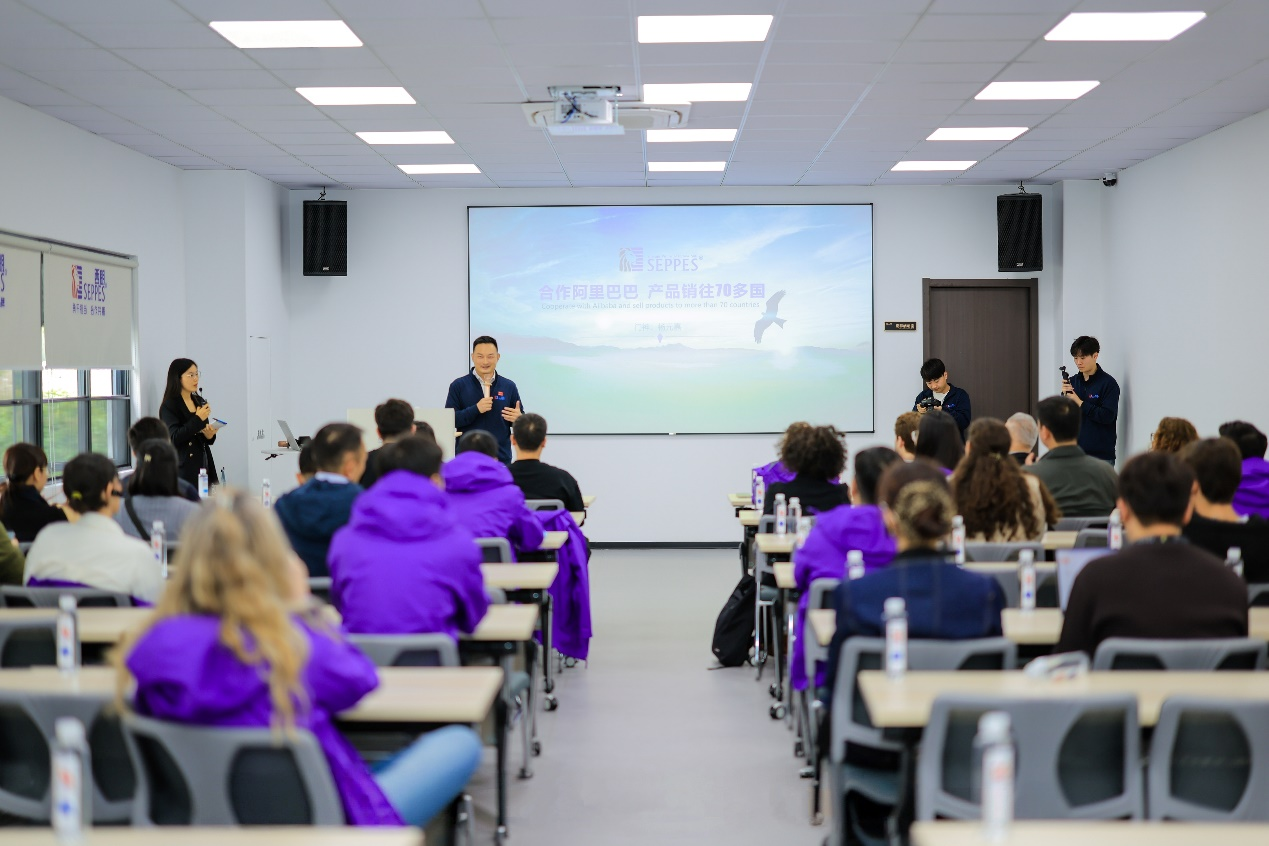
SEPPES Doors Chairman and General Manager Yang Yuanjia introducing the company and products to overseas guests in the main conference room
Through Alibaba.com's Verified Supplier certification, a third-party organization systematically reviewed SEPPES Doors' R&D, manufacturing, and quality systems. This provided the customer with clear, verifiable background information and reduced the cost of repeated explanations and endorsements. After the trial order was successfully delivered, the customer soon launched a second round of procurement.
The second order exceeded RMB 1 million, with products shipped to several of the customer's factories in different countries. The company later became a stable long-term customer of SEPPES Doors.
Returning to this year, tariff changes have become an unavoidable topic for most companies expanding overseas. For SEPPES Doors, however, customers in more than 70 countries have created a multi-market layout that spreads risk to a certain extent, limiting the impact of tariffs.
Under the wave of AI, a series of tools upgraded by Alibaba.com has further accelerated SEPPES Doors' growth.
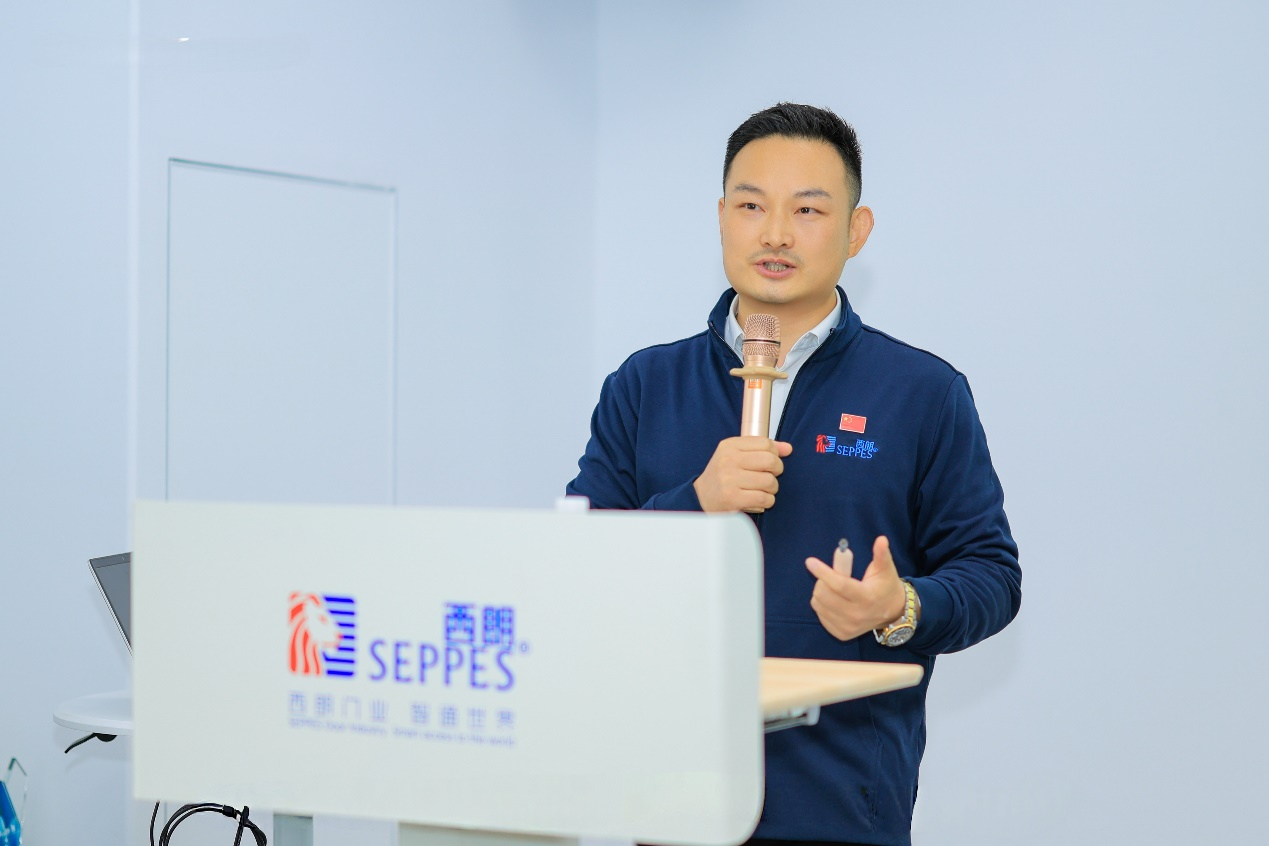
SEPPES Doors Chairman and General Manager Yang Yuanjia answering questions from overseas guests
3. How AI Unlocks Growth Leverage
As overseas markets expanded, Yang soon faced a new reality. SEPPES Doors received inquiries from different countries, industries, and factory scenarios. Demand varied widely, customization was high, and communication became far more complex than in the early stage. Because of time-zone differences, inquiries arriving at two or three in the morning were often of higher quality. But efficiency gained at the cost of rest and health is not sustainable.
This challenge is not unique to SEPPES Doors. One cross-border e-commerce practitioner said that in foreign trade, not staying up late is the exception. At key moments in negotiations or after-sales service, salespeople often have to follow the buyer's time zone to avoid losing customers. After an order is confirmed, they may need to prepare documents and advance payment matters overnight. More practically, when orders are unstable, many people can only extend working hours to increase the possibility of closing deals.
The AI tools launched by Alibaba.com have helped foreign trade professionals regain some of their sleep. The platform introduced four AI agents for sellers, covering reception, product posting, operations, and conversion. These tools embed inquiry response, information collection, product generation, and data analysis into daily operations, allowing salespeople to convert orders even when they are not online immediately.
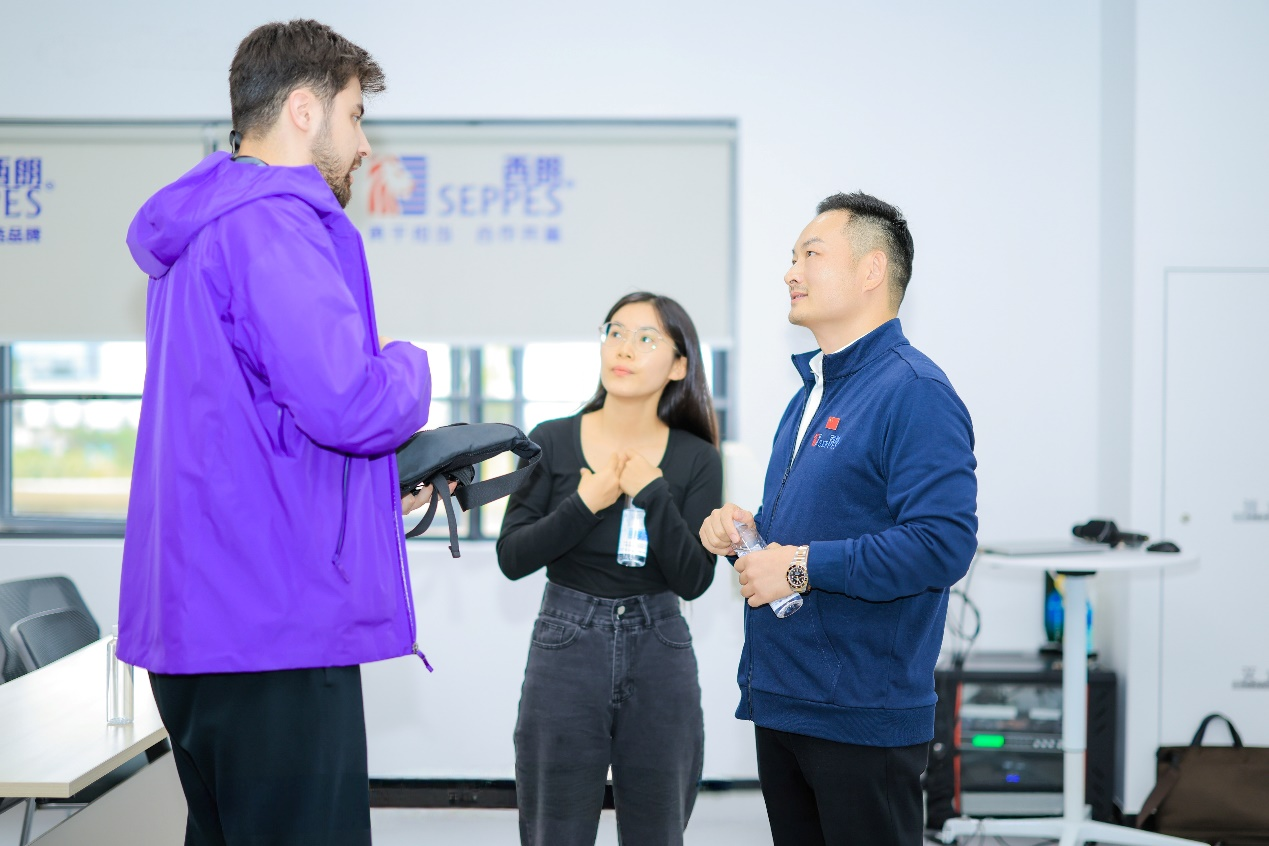
SEPPES Doors Chairman and General Manager Yang Yuanjia in in-depth discussion with overseas guests
One experienced SEPPES Doors foreign trade salesperson who once did not trust AI has also come to value the platform's AI tools.
This salesperson had worked in foreign trade for many years, understood the products well, and had accumulated substantial practical experience. Her performance had always been stable. Precisely because she was experienced, she had developed a fixed rhythm and personal communication style when following up on orders. In one order worth nearly RMB 1 million, early communication went smoothly, and technical parameters, application scenarios, and price ranges had been confirmed repeatedly. But as the deal approached closure, the customer still did not provide a clear response.
Based on past experience, she tried several follow-up approaches, but none produced an obvious effect. To move the process forward, Yang suggested that she provide the complete communication record to the AI tool and let the system generate follow-up recommendations.
Soon, based on the historical conversation and platform data, AI offered several different communication options. The salesperson selected one that better matched the customer's state and sent it almost unchanged. Two days later, the customer replied and confirmed the order.
The experience made a strong impression on the veteran salesperson. For her, AI provided a perspective that broke through habitual judgment at a critical moment. In Yang's view, this is exactly where AI creates value in foreign trade: it does not replace people, but helps them maintain stable judgment and efficiency during high-intensity, long-cycle cross-border communication.
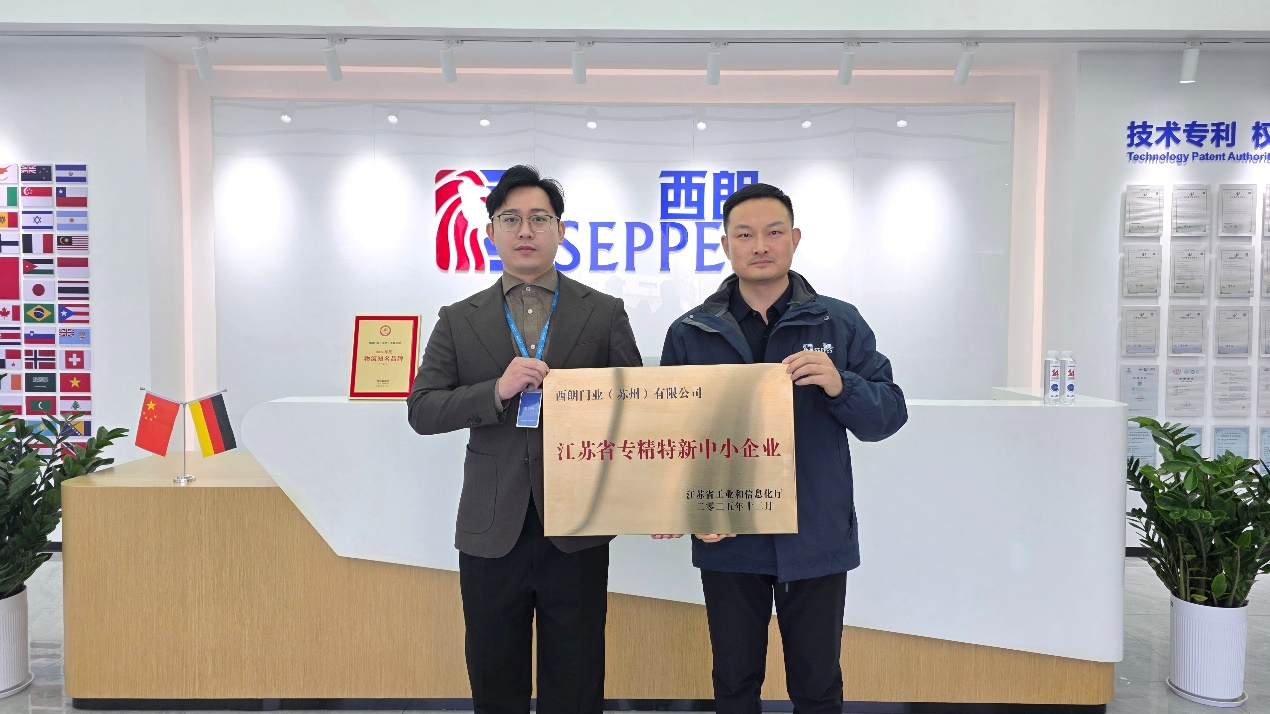
SEPPES Doors recognized as a Jiangsu Specialized, Refined, Distinctive, and Innovative Enterprise
4. Conclusion
Through the experience of Yang Yuanjia and SEPPES Doors, we see a more realistic side of Chinese manufacturing going global: rebuilding capabilities amid uncertainty and using long-termism to withstand short-term fluctuations.
Going global has never been a simple act of market expansion. It is a long-term process in which Chinese companies move closer to global users, understand global rules, and reshape their own capabilities. Over the past decade and more, Chinese manufacturing has completed a crucial transition from going out to standing firm. Today, this process is entering deeper waters, where the competition is no longer only about cost and speed, but about systematic capabilities and sustainable growth.
In this process, Alibaba.com is evolving together with Chinese companies: turning scattered experience into deployable capabilities and amplifying individual effort into organizational efficiency. The story of SEPPES Doors is a snapshot of a new generation of globalizing companies.
Outward lies a broader and more complex global market. Inward lies the continuous refinement of products, efficiency, and organizational capability. When change becomes the norm, long-termism and partnership with platforms that provide technology, AI tools, and strategic insight may be key to helping Chinese manufacturing move more steadily and further in the next round of global competition.