EN


Turning “Rented Traffic” into “Assets You Own” SEPPES Chairman Yang Yuanjia Explains Global Brand Expansion and Digital Asset Building
“Traffic on a platform is rented; the assets of your own website belong to you.” In a recent presentation titled “Global Brand Expansion and Digital Assets through Owned Websites for Export Businesses,” Yang Yuanjia, Chairman of SEPPES and a contracted Gold-Level Lecturer for Alibaba.com, outlined his approach to transitioning into international trade, brand pricing, and the coordinated use of owned websites, AI prospecting, and CRM.
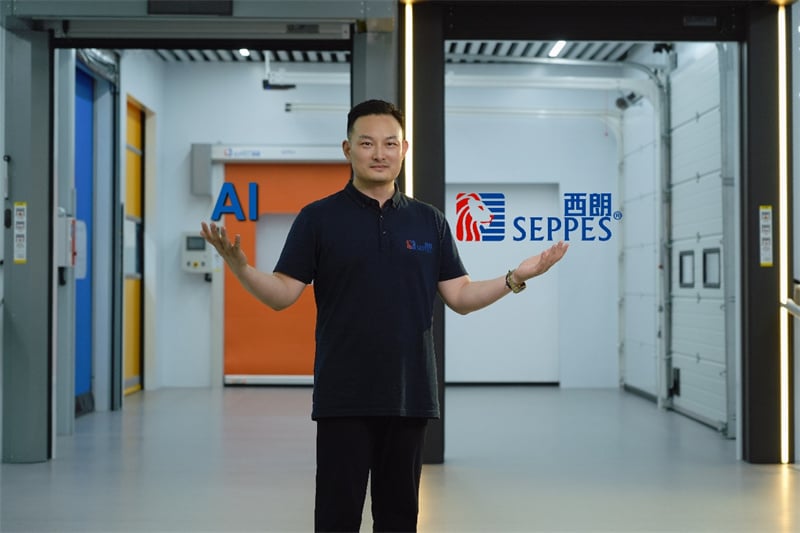
Above: Yang Yuanjia, SEPPES Chairman and a contracted Gold-Level Lecturer for Alibaba.com, brings together AI and brand building.
From the Limits of the Domestic Market to Exports to 94 Countries
Yang began by reviewing SEPPES’ transition into international trade. Founded in 2011 and specializing in industrial specialty doors and logistics equipment, the company has entered its 15th year in business. Its exports now reach 94 countries, and one in every seven Fortune Global 500 companies is a customer.
The shift was driven by necessity. Yang said domestic intermediaries pushed prices down sharply, while SEPPES’ early lack of import and export qualifications cost it orders to competitors. “Even a leading domestic brand faces a ceiling. The domestic market alone cannot support a company’s second growth curve.” This urgency led SEPPES to formally enter international trade in 2020. Its international business grew 129% year on year last year, with growth expected to remain close to 100% this year.
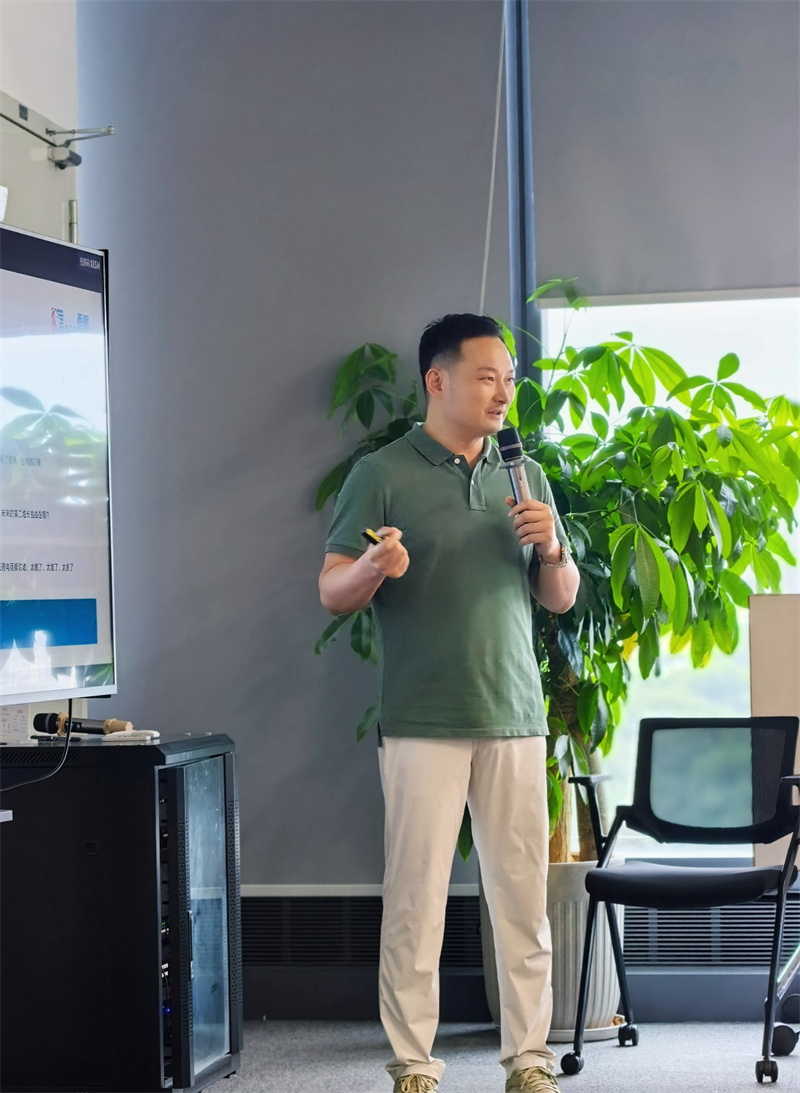
Above: Yang Yuanjia, SEPPES Chairman and a contracted Gold-Level Lecturer for Alibaba.com, delivers his presentation.
The “Five Decisions” and the “Ten-Character Formula”: The Core of a Brand
In Yang’s view, third-party platforms offer substantial traffic and a quick start, but they set the rules, bidding costs rise year after year, and the traffic ultimately belongs to the platform. With an owned website, the business controls its domain and web space, while all the traffic, data, and customer relationships it builds belong to the company. This makes the website central to an audience the business can reach directly.
His original “Five Decisions” framework for branding covers positioning, pricing, product form, market tier, and strategic resolve, with pricing at its core. “At a price difference of 5% to 10%, customers may not notice. At 20%, competition is about product differentiation. At 30% or more, it is about brand strength—and that can actually make it easier to attract decision-makers’ attention and trust.”
The accompanying marketing “Ten-Character Formula” comes down to two messages: “Notice me” and “Believe in me,” representing visibility and trust. Visibility is the yang: using SEO or advertising to secure search rankings and ensure the brand is seen. Trust is the yin: using professional content and service to convert that attention into business. Together, they complete the branding cycle. Taking a 40-foot container of products with identical specifications as an example, he said branding could deliver three times the gross profit of an unbranded offering: “One container does the work of three.”

Above: The audience at the presentation.
Three Pitfalls and Six Selection Criteria for Export Business Websites
To help export businesses avoid costly lessons, Yang identified three common pitfalls. The first is a “repackaged website” scheme: charging more than RMB 20,000 to translate and reskin a domestic website optimized for Baidu, only for it to generate neither search indexing nor inquiries. The second is an RMB 8,000 AI-template website that lacks professional SEO and a sound code architecture. The third is a seminar sales tactic that uses promises about “AI trends” and “guaranteed success” to secure contracts starting at RMB 88,000, followed by successive additional charges.
He also offered six criteria for selecting a provider: at least five years in business, genuine B2B case studies, a team providing long-term support, data-driven processes, tangible results, and a check of the number of employees enrolled in social insurance to screen out shell companies.
The Numbers Behind a Website ROI of 73:1
One of the presentation’s main attractions was SEPPES’ website performance figures. Its website partner, Xiaoman (OKKI), offers a seven-stage service: diagnosis, website delivery, dedicated consultant support, ongoing SEO, advertising guidance and performance reviews, security support, and sustained results. The service commits to delivering rankings for 260 core keywords and 260 marketing articles within one year. “Most agencies stop at website delivery. The real value starts at stage three.”
In the 12 months ending July 31, 2026, SEPPES’ website generated RMB 11.75 million in sales across 86 orders, accounting for 21% of its total order count. Monthly inquiries averaged nearly 40 and continued to rise. Direct spending totaled approximately RMB 160,000: RMB 69,800 for website development, RMB 40,000 in allocated labor costs, and RMB 50,200 for Google Ads. The reported ROI reached 73:1, exceeding the industry benchmark of 20–50:1 for strong performance.
SEPPES combines SEM with SEO/GEO: paid advertising generates near-term orders, while organic traffic and AI search build compounding value over time. Inquiries are automatically imported into the CRM, and an intelligent system handles initial responses outside working hours.

Above: The presentation in progress.
AI Prospecting and CRM: Building Digital Assets
SEPPES has also deployed AI prospecting and CRM systems. The AI tools identify new customers, re-engage existing customers, and conduct social media outreach, operating automatically around the clock. Within a few months, they reached more than 140,000 prospects, far exceeding the annual commitment of 24,000. The CRM uses a shared customer pool—automatically returning accounts to the pool after 120 days without follow-up—along with customer segmentation and risk monitoring. These measures prevent staff from monopolizing customer resources or diverting orders for personal gain, making management depend on system rules rather than internal power struggles.
“The website brings people in, AI prospecting finds them, and CRM keeps them. Only when all three work together do you create a set of digital assets with an automated flow between them,” Yang concluded. He also offered a different perspective on business assets: land and equipment can depreciate or even become financial burdens, whereas customer data, AI training data, and website authority are the assets that truly underpin competitiveness. The longer they are developed, the stronger their authority becomes, ultimately giving the business the power to command a premium.
He was equally direct about the role of business owners: “Determination matters more than ability. An owner’s core responsibility is to do the right things, rather than do employees’ work correctly on their behalf. Introducing advanced tools that make work easier matters more than asking a team to struggle without them.”
Founded in Suzhou in 2011, SEPPES specializes in high-end intelligent industrial doors. Recognized as a National High-Tech Enterprise and a Jiangsu enterprise specializing in niche markets through distinctive, innovative expertise, the company has put more than 60 patents into commercial use and obtained nearly 20 certifications, including CE, SGS, and UL. It serves nearly 100 Fortune Global 500 companies, including ABB, 3M, General Electric, Tyson Foods, Coca-Cola, and Thermo Fisher Scientific, and has established partnerships with centrally administered and other state-owned enterprises such as CRRC, China National Building Material Group, and COFCO. It is also a supplier to well-known companies including Bosch, Geely, Linde Material Handling, Yangtze River Pharmaceutical Group, Nongfu Spring, Foxconn, and Hikvision. Its service standard is “One door, one unique code, lifetime service.”