EN
EN


Sectional Overhead Garage Doors: The Gold Standard for Industrial Insulation & Security
Sectional Overhead Garage Doors are the preferred choice for warehouses, factories, and commercial centers requiring thermal efficiency and security. Composed of insulated sandwich panels that slide up tracks parallel to the ceiling, these doors offer superior R-values (insulation) compared to rolling shutters. They feature customizable lift methods (Standard, High, or Vertical Lift) to maximize interior space usage.
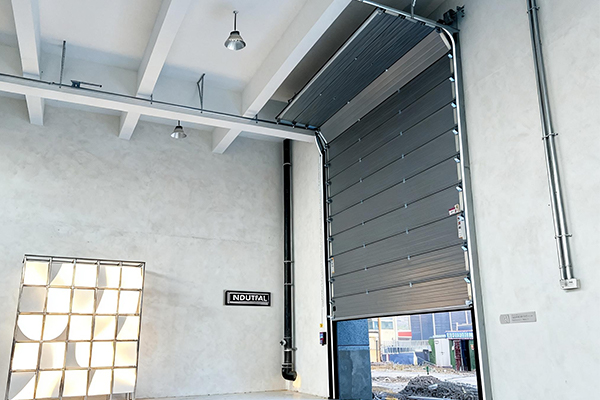
1. What Defines a "Sectional Overhead" Door?
Unlike a rolling shutter that coils into a box, a Sectional Overhead Garage Door functions differently:
Panel Construction: The door is made of multiple horizontal panels (sections) hinged together.
Movement: As the door opens, it travels up vertical tracks and then horizontally along the ceiling (overhead).
Counterbalance: It relies on a heavy-duty Torsion Spring System to balance the door's weight, allowing it to be lifted manually or by a relatively small motor.
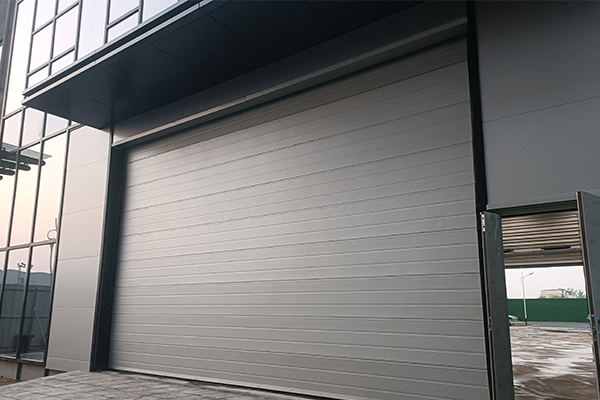
2. Why Industries Upgrade to Sectional Doors
While rolling shutters are cheaper, Sectional Overhead Doors dominate modern facility planning for three reasons:
A. Superior Thermal Insulation (Energy Saving)
This is the primary differentiator.
Structure: The panels are typically 40mm to 50mm thick, filled with high-density Polyurethane (PU) foam.
Sealing: EPDM rubber seals are installed on the top, bottom, and sides.
Result: They keep warehouses warm in winter and cool in summer, significantly lowering HVAC energy costs.
B. "Vertical Lift" Space Optimization
For factories with high ceilings or cranes, the track path can be customized:
Standard Lift: Door turns 90 degrees immediately.
Vertical Lift (Guillotine): The door goes straight up the wall before turning. This clears the overhead space for cranes, lighting, or shelving.
C. Aesthetic & Lighting Options
Sectional doors allow for the integration of transparent vision windows (oval or rectangular) or full-vision aluminum sections. This brings natural light into the warehouse, improving worker safety and reducing lighting costs.
3. Lift Types: Fitting Every Building Structure
|
Lift Type |
Description |
Best Application |
|
Standard Lift |
Tracks turn horizontal just above the door header. |
General warehousing, residential garages. |
|
High Lift |
Tracks go vertically higher up the wall before turning. |
Warehouses with high ceilings but no cranes. |
|
Vertical Lift |
Tracks go straight up the wall (no horizontal turn). |
Facilities with overhead cranes or mezzanines. |
|
Roof Pitch Lift |
Tracks follow the angle of a sloped roof. |
Pre-engineered steel buildings with sloped roofs. |
4. Technical Specifications (Industrial Grade)
|
Feature |
Specification |
Note |
|
Panel Material |
Double-layer Galvanized Steel |
0.4mm - 0.5mm steel thickness |
|
Core Insulation |
Polyurethane (PU) Foam |
Density: 45kg/m³ |
|
Panel Thickness |
40mm (Standard) / 50mm (Cold Room) |
R-Value approx. 14-16 |
|
Wind Load |
Class 3 / Class 4 |
Up to 700N/m² |
|
Safety Devices |
Spring Break / Cable Break Devices |
Prevents door falling if components fail |
|
Operation |
Industrial Shaft Motor |
Chain hoist available for manual emergency use |
5. FAQ: Sectional Doors vs. Rolling Shutters
Q: Which is better: A Sectional Overhead Door or a Rolling Shutter?
A: If Insulation and Silence are priorities, choose the Sectional Door. Its thick panels provide thermal breaks. If Price and Simplicity are the main goals, a Rolling Shutter is sufficient.
Q: How much headroom is required?
A: It depends on the lift type. Standard lift requires about 400mm-500mm. Vertical lift requires headroom equal to the door height plus 500mm.
Q: Are these doors safe for heavy usage?
A: Yes. Industrial sectional doors come with standard safety features:
1. Airbag/Bottom Sensor: Reverses door if it hits an object.
2. Spring Break Device: Locks the shaft if the spring snaps.
3. Cable Break Device: Catches the door panel if the lifting cable snaps.