EN
EN


High Speed Doors for Automotive Industry: How to Eliminate Dust Contamination in Your Paint Shop
In the precision-driven world of automotive manufacturing, even a microscopic speck of dust can lead to a "rework" disaster. For facility managers in the automotive sector, maintaining the integrity of controlled environments—especially paint shops and precision assembly lines—is a constant battle against air pressure drops and airborne contaminants.
Standard industrial doors are often the "weak link" in this chain. They move too slowly, seal poorly, and become the primary source of environmental failure.
As a leading provider of high speed doors for the automotive industry, SEPPES has developed a specialized solution focused on one critical functional point: Superior Airtightness and Cycle Speed.\
The Real Problem: The "Vacuum Effect" of Slow Doors
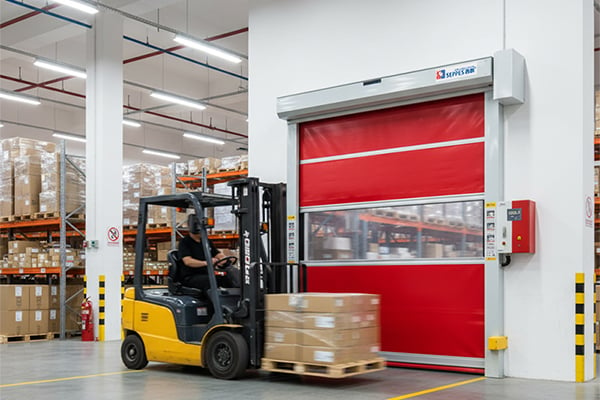
Automotive paint booths operate under positive pressure to keep dust out. Every time a traditional door opens to let a vehicle chassis pass, the pressure drops.
Slow transit times allow unfiltered air to rush in.
Poor seals around the door perimeter allow dust to leak in even when the door is closed.
Result: Increased defect rates, wasted materials, and thousands of dollars in downtime.
The SEPPES Solution: Specialized High-Speed Doors for Automotive Clean Zones
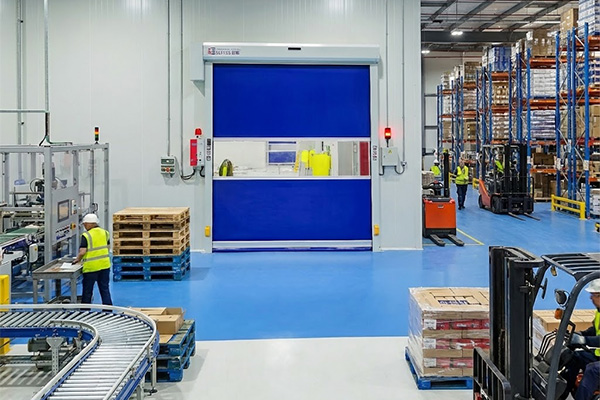
To solve the contamination problem, SEPPES focuses on the High-Frequency Airtight Performance of our rapid doors. Here is how our technology addresses the specific needs of automotive plants:
1. Zipper-Type Self-Repairing Tracks (The Ultimate Seal)
Unlike traditional "weighted" doors, SEPPES high-speed doors use a zipper-edge design. The curtain is tightly zipped into the side tracks, creating a near-hermetic seal. This eliminates the gaps found in standard doors, ensuring that your paint shop's positive pressure remains stable.
2. 1.5m/s Opening Speed
Time is the enemy of air quality. SEPPES doors can open at speeds up to 2.0 meters per second. By minimizing the time the "barrier" is open, we reduce the volume of air exchange by up to 80% compared to conventional sectional doors.
3. Intelligent Interlocking Systems
In automotive manufacturing, "Airlock" systems are vital. SEPPES doors are equipped with smart control systems that allow for interlocking: Door B cannot open until Door A is fully closed. This creates a buffer zone that prevents external wind and dust from entering the core production area.
Application Scenario: From Stamping to Final Assembly
While paint shops are the most sensitive, SEPPES high speed doors for the automotive industry add value across the entire production line:
Stamping Workshops: Separating high-noise areas from the rest of the plant.
Battery Assembly (EV): Maintaining strict humidity control for electric vehicle battery production.
Logistics Loading Docks: Facilitating the rapid movement of parts via AGVs (Automated Guided Vehicles) without losing internal climate control.
Technical Specifications for Automotive Engineers
|
Feature |
SEPPES High-Speed Door Performance |
|
Opening Speed |
Adjustable up to 2.0 m/s |
|
Wind Resistance |
Class 3-6 (depending on model) |
|
Seal Performance |
Zipper-track / Weighted bottom edge options |
|
Safety Features |
Infrared sensors, Wireless safety edges, Light curtains |
|
Durability |
Tested for 1 million+ cycles |
Why SEPPES?
At SEPPES, we understand that for the automotive industry, a door is not just an entrance—it is a piece of production equipment. Our doors are designed to integrate seamlessly with your factory's PLC (Programmable Logic Controller) and safety protocols.
By choosing SEPPES, you are investing in higher yield rates, lower energy costs, and a cleaner production environment.
Ready to optimize your facility's airflow? Contact SEPPES today for a customized site evaluation and see why global automotive brands trust our high-speed door solutions.