EN
EN

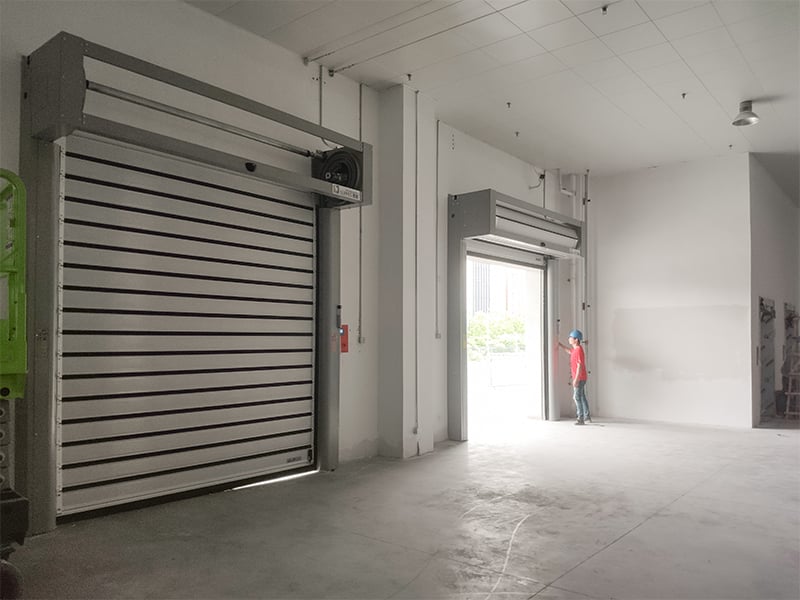
How Fast-Acting Roll-Up Doors Minimize Air Exchange and Energy Loss
Understanding the link between door speed and conditioned air loss
Traditional industrial doors create recurring energy leaks during operation cycles. When conventional models take 30-45 seconds to open and close, they allow significant heat transfer through air exchange. Fast-Acting Roll-Up Doors address this issue with operating speeds 4-6 times faster than standard alternatives, drastically reducing the window for conditioned air loss.
Rapid cycling reduces exposure time and thermal infiltration
High speed doors today can go through a complete open-close cycle in less than six seconds, while older versions took well over forty five seconds. According to HVAC Performance Journal from 2023, this speed difference cuts down on heat loss by about 58 percent. Why does this happen? Well, there are several reasons actually. First off, when doors stay open for shorter periods, they move less air around inside the building. Second, there just isn't enough time for temperatures to really stabilize between door movements. And third, these fast acting doors don't need to operate as frequently throughout the day, especially in places where people come and go constantly like warehouses or manufacturing facilities.
Case study: Energy savings in a distribution center using FastActing RollUp Doors
A regional logistics hub achieved a 34% reduction in HVAC runtime after replacing sixteen legacy doors with Fast-Acting Roll-Up Doors. Key results from the 14-month energy efficiency study include:
| Metric | Before Installation | After Installation | Change |
|---|---|---|---|
| Monthly HVAC Costs | $8,450 | $5,580 | -34% |
| Door-Related Air Leakage | 412 CFM | 139 CFM | -66% |
| Annual Maintenance Costs | $3,200 | $1,050 | -67% |
The facility reached full ROI in 22 months due to combined energy savings and reduced mechanical wear on climate systems. Average cycle times measured at 5.8 seconds aligned with industry benchmarks for optimal thermal retention.
Thermal Performance: Insulation, Seals, and Air Leakage Control
The Role of Insulation and Edge Seals in Reducing Energy Transfer
Fast acting roll up doors designed for high performance cut down on heat loss thanks to their layered insulation system and those tight edge seals that really work. The core material inside these doors is polyurethane foam with a density range between 3 to 4 pounds per cubic foot, which does a great job stopping heat from moving through them. Around the edges we find flexible gaskets that get squeezed together at pressures ranging from 15 to 20 pounds per square inch, creating an almost airtight barrier. Facility managers saw something interesting during audits last year too. When seals weren't installed properly in cold storage areas, heating ventilation systems had to run nearly 28 percent longer than they should have, according to findings from early 2023 assessments across several warehouses.
Advanced Sealing Technologies in High-Speed Roll-Up Doors
Modern designs feature auto-adjusting bottom bars that maintain over 98% seal contact across uneven thresholds (±¼"). Dual-brush seals with staggered nylon filaments reduce air leakage to less than 1.5 CFM/ft² at 25 mph winds—65% better than single-brush systems.
Comparative Analysis: Standard vs. High-Speed Roll-Up Doors in Air Leakage
| Metric | Standard Doors | High-Speed Doors |
|---|---|---|
| Average Air Leakage | 4.2 CFM/ft² | 1.1 CFM/ft² |
| Annual Heat Loss | $18.70/ft² | $4.90/ft² |
| Door Cycle Duration | 12–18 seconds | 1.2–1.8 seconds |
Data from a 2024 warehouse study shows high-speed models reduce conditioned air loss by 60% during frequent access scenarios (50+ cycles/hour).
Reducing HVAC Load and Improving System Efficiency
HVAC System Efficiency Improvement with High-Speed Doors
Fast-Acting Roll-Up Doors enhance HVAC performance by limiting air infiltration during frequent operations. With cycle times of 1.5–3 seconds—85% faster than traditional models—conditioned air loss is restricted to under 12% per cycle, based on thermal imaging studies. As a result, HVAC systems maintain stable temperatures with 25–30% less runtime.
Lowering Climate Control Demand in Warehouses and Production Areas
In high-traffic zones, rapid door operation minimizes mixing between controlled interiors and external environments. One Midwest automotive parts warehouse cut HVAC energy use by 38% after upgrading to high-speed doors, especially in areas with more than 40 daily forklift movements. The technology prevents 70–90% of thermal transfer incidents associated with slower doors.
Data Insight: Up to 70% Reduction in Energy Demand from Optimized Door Use
When paired with automated traffic sensors, Fast-Acting Roll-Up Doors maximize HVAC efficiency. Energy monitoring at a Pennsylvania food distribution center showed a 68% drop in refrigeration costs per door cycle, equating to $11.50 in annual savings per square foot of doorway. Full ROI typically occurs within 14–18 months.
Applications in Cold Storage and Temperature-Controlled Facilities
High-Speed Door Applications in Cold Storage Environments
Cold storage facilities need fast acting roll up doors when they're storing things that must stay between minus 20 degrees Celsius and four degrees Celsius. Think about all those perishable items like meds, fresh fruits and veggies, and frozen products. The reason these doors matter so much is because they open and close super quick, usually within one to two seconds. This speed really helps cut down on how much cold air escapes when forklifts keep coming in and out throughout the day. The result? Better temperature control overall and cleaner conditions too. Plus, these doors stop frost from forming inside and block excess moisture from getting in, both of which can wreck havoc on equipment over time. According to some research done last year by folks who specialize in IoT monitoring systems, warehouses with these modern doors saw their temperature problems drop by around two thirds compared to older facilities still using traditional door setups.
Energy Cost Reduction in Temperature-Controlled Facilities Using FastActing RollUp Doors
These doors cut down on air leakage to less than 3 seconds per cycle, which means HVAC systems run 25 to 40 percent less time in big refrigerated warehouses. The combination of dual brush edge seals and those thick insulated panels with R values going up to around 14.5 creates pretty much airtight barriers. Some studies in agricultural cold storage show this setup reduces convective heat transfer by nearly 92%. For facilities that need to manage several temperature zones at once like dairy processing plants or companies distributing vaccines, the savings add up fast. Real world reports indicate anywhere from $18k to over $50k saved each year per set of doors just from running compressors less often and needing fewer defrost cycles.
Case Study: Cold-Storage Logistics Center Cuts Energy Bills by 40%
A Midwest U.S. logistics hub replaced 12 slow-speed doors with Fast-Acting Roll-Up Doors at its –25°C freezer docks. Over 18 months, the upgrade led to:
- Annual kWh consumption: 2.1M → 1.26M (–40%)
- Door-related heat gain: 37,000 BTU/hr → 6,800 BTU/hr
- HVAC maintenance costs: $28k → $11k
The $240,000 project achieved ROI in 2.7 years, supported by energy rebates and lower product loss—a critical factor as global cold chain demand grows 8.4% annually (Market Research Future 2024).
Measuring ROI and Long-Term Energy Savings with Fast-Acting Doors
Reducing Energy Costs with High-Performance Doors: ROI Analysis
Facilities typically recover the investment in Fast-Acting Roll-Up Doors within 18–24 months through reduced HVAC loads. Energy audits from 2023 show climate control expenses drop by 30% compared to standard models. With cycle times under one second, these doors prevent conditioned air migration, directly lowering monthly energy bills and extending equipment lifespan.
Energy Conservation in Warehouses: Quantifying Savings Over Time
A three-year study of 50 industrial sites revealed average annual savings of $4.80 per square foot in climate-controlled spaces equipped with high-speed doors. This efficiency results from a 60–85% reduction in air exchange events during peak hours compared to traditional rolling or shutter doors.
Industry Trend: Integration of Smart Sensors with FastActing RollUp Doors
New IoT-enabled models now integrate with building automation systems, using real-time traffic and weather data to optimize door operation. This smart technology integration further reduces unnecessary openings, cutting annual energy waste by an additional 12–18% in pilot facilities.
FAQ
What are Fast-Acting Roll-Up Doors?
Fast-Acting Roll-Up Doors are industrial doors designed to open and close much faster than traditional doors, significantly reducing air exchange and energy loss. They are commonly used in facilities like warehouses and cold storage.
How do these doors improve energy efficiency?
These doors open and close quickly, minimizing the time they are open, which reduces the amount of conditioned air that escapes from the facility. This results in lower energy consumption and HVAC system usage.
What are some real-world benefits of using Fast-Acting Roll-Up Doors?
Benefits include significant reductions in HVAC costs, lower air leakage, improved thermal retention, and faster return on investment. Facilities use them to enhance thermal performance and reduce maintenance costs.
How long does it take to see a return on investment with these doors?
ROI typically occurs within 18 to 24 months, thanks to reduced energy costs and enhanced efficiency in climate control systems.
Can these doors be integrated with smart technologies?
Yes, modern Fast-Acting Roll-Up Doors can integrate with smart building systems, utilizing sensors and real-time data to optimize door operations further and reduce energy waste.
Table of Contents
- How Fast-Acting Roll-Up Doors Minimize Air Exchange and Energy Loss
- Thermal Performance: Insulation, Seals, and Air Leakage Control
- Reducing HVAC Load and Improving System Efficiency
- Applications in Cold Storage and Temperature-Controlled Facilities
- Measuring ROI and Long-Term Energy Savings with Fast-Acting Doors
- FAQ